WHAT we do
WHAT Do WE OFFER?
Article Opportunities, Workshops (in-person & remote), and Tools & Resources for Kingdom Living
Project Arctos exists for those seeking a more vibrant and Kingdom-minded spirituality. Our focus is to build up the body of Christ by:
COMMUNING WITH GOD:
Facilitating tools, workshops, and spaces in-person and online for hearing and partnering with God daily. Including articles written by everyday Christians:

Explore how Christians can hold a coherent, Christ-centered vision of truth in an age of cultural fragmentation and intellectual complexity. In The Shape of Understanding, Project Arctos examines how moral insight, cultural formation, and spiritual reality emerge from deeper structures of creation—inviting readers to rediscover Christ as the unifying Logos who brings clarity, order, and meaning to a noisy and divided world.
So the question is not whether morality exists, but where it stands in the order of knowing.

Explore the profound spiritual significance of the gifts entrusted to every believer. Learn how God-given talents, callings, and capacities are meant not for self-advancement but for service, stewardship, and Kingdom impact—inviting Christians to rediscover purpose, gratitude, and responsibility in how they live, lead, and love.

We in the Church often think in this way— our focus is being in tune. How do I get my biblical doctrine right? How do I ensure I’m doing what’s right? But did you ever wonder if being in tune was the purpose of music? This perspective of being in tune, connected to God first, is important, even necessary, but at the same time, using the same analogy, being in tune is not sufficient for good music.

Looking back, I can clearly see it as one larger theme gifted to my Big Grand Uncle, my family line, and to me by our Creator God. It is larger because God in His grace pointed us to His majestic attributes and design—the invisible beyond the visible of the world. God revealed Himself not only in my youth through creation but to my family in a hunger for the truth of His character.

There are a handful of times in my life where God has surprised and ‘spoken’ to me even more overtly than I’d ever expected. At a time when I was feeling particularly discouraged with the return on my efforts in life, I was grumbling internally (partly to God, but mostly to myself) as I walked the short distance down the street…
“…and to this day I weep at the remembrance of being and feeling seen by God that day."

An encouragement to those Christians trying to build a close relationship with God, from one who has been practicing and refining his relationship with God for many years.
“In my heart, I was craving for a true relationship in which I could see God as a Father and a Friend… With this kind of spiritual pursuit, I have been blessed to be on a pathway to continue developing a really close and intimate relationship with God.”

What wisdom would you give to your old self on following Jesus well?
I say, “The Lord sees you. It feels insufficient, but plant that truth deep in your heart. He sees you, and he’s with you…” and “He will use the mundane to reveal Himself. God will use the mundane to reveal Himself…”

Communing with God face to face isn’t reserved for the “greats” in times past, but that access, that face-to-face friendship is something we all have access to in the present.
Prayer is the one activity that ties together the faculties of the physical, mental, emotional, and spiritual.

What does it mean for me, personally, in this current season of my life, given my own particular resources, giftedness, and calling from the Lord, to live in a way that is good, righteous, truthful, and wise, making the most of the opportunities I am specifically called to pursue, so that I am able to “please the Lord”?

…we are overdue for seeking a rediscovery of Jesus’s “easy yoke” when it comes to our understanding of what it looks like to have a more “restful” spiritual and devotional life.

The skill tree is a practice-based initiative based on the beatitudes in the Sermon on the Mount found in Matthew 5. Using these beatitudes, we’ve developed a skill tree for each beatitude that contains tasks and achievements for walking through the spirit of the beatitude with the grace of God.

From the early onset of quarantine when we couldn’t tell the difference between Tuesday and Saturday anymore to the shock of how long our small group has been meeting via Zoom, the way I interpret and measure time has been one of the biggest shifts throughout the COVID-19 pandemic.

I could try my best to conform to my dad’s ideals and deny my deepest desires, or I could choose the creative life—and perhaps the life God intended for me.

People say that being a pastor is hard, but I would argue that being a pastor’s wife might be even more difficult.

Do we let our worldly measures of what it means to be a Christian get in the way of a posture of daily reliance in God?


Some people joke and call seminary a cemetery, a place where enthusiast followers of Jesus become dull and headstrong. But what if seminary can be a cemetery for something good?

God isn’t looking for perfect people. He’s not looking for saints. He’s not looking for the most righteous people to accomplish his goals. He’s looking for tough people, people like General Butt Naked.
CREATING TOGETHER:
Promoting independent Christian reading from a variety of lay believers. (maybe that’s you!)
Presenting opportunities to practice and develop creative skills and thinking, both online and in-person.

What does your dream church look like? Surely no church is fully perfect, but whether you’re reflecting on what church was like for you growing up or what your current church is like, there are likely some aspects which you wish were a little different.

How will advances in technology, like chatgpt3, the continuing after-effects of the COVID-19 pandemic, and the pervasiveness of divisive American politics impact the Church and your Christian witness in 2023..?

What can local church ministry look like when we take the time to partner with our local communities and include them in our vision and planning?
The skill tree is a practice-based initiative based on the beatitudes in the Sermon on the Mount found in Matthew 5. Using these beatitudes, we’ve developed a skill tree for each beatitude that contains tasks and achievements for walking through the spirit of the beatitude with the grace of God.
I could try my best to conform to my dad’s ideals and deny my deepest desires, or I could choose the creative life—and perhaps the life God intended for me.

Like the stained glass window that sings its own melodies of different colors of pain it did not choose, I would later understand that God would put my broken pieces together to create a work of art, God’s perfect composition of beauty and worth.


Disruptions are just part of life. No matter how well we try to prepare or plan around them, sooner or later something comes along to interrupt your flow or shake your foundation.

A few years ago in the late fall or winter, I was sitting in the subway train when a young man came into my train car and broke the public silence…

I always thought there would be a point when I would finally know enough that I could speak without doubt. I wanted to rest in some authority of really understanding. I didn’t want to be wrong, I don’t want to mislead people, I didn’t want people to think I was dumb.
CONNECTING WITH ONE ANOTHER:
Hosting spaces and discussions for connecting constructively as a broader Christian community.
Practicing practical Kingdom skills, both individually and as a community. (Check out our Skill Tree devotional model)
Creating opportunities to step up and step out of spiritual hibernation, letting your gifts add flavor to the world around you.

Robots get fixed instantly. Plants take time, patience, and care to heal. This piece asks whether we treat people like machines to repair — and what it means to love others as living, growing souls instead.

George downsized his life of 46 years, lost his wife to cancer weeks later, and found a box of their 1960s love letters — a story of grief, gratitude, and letting go. One man's story of grief and faith and continual renewal in Christ.
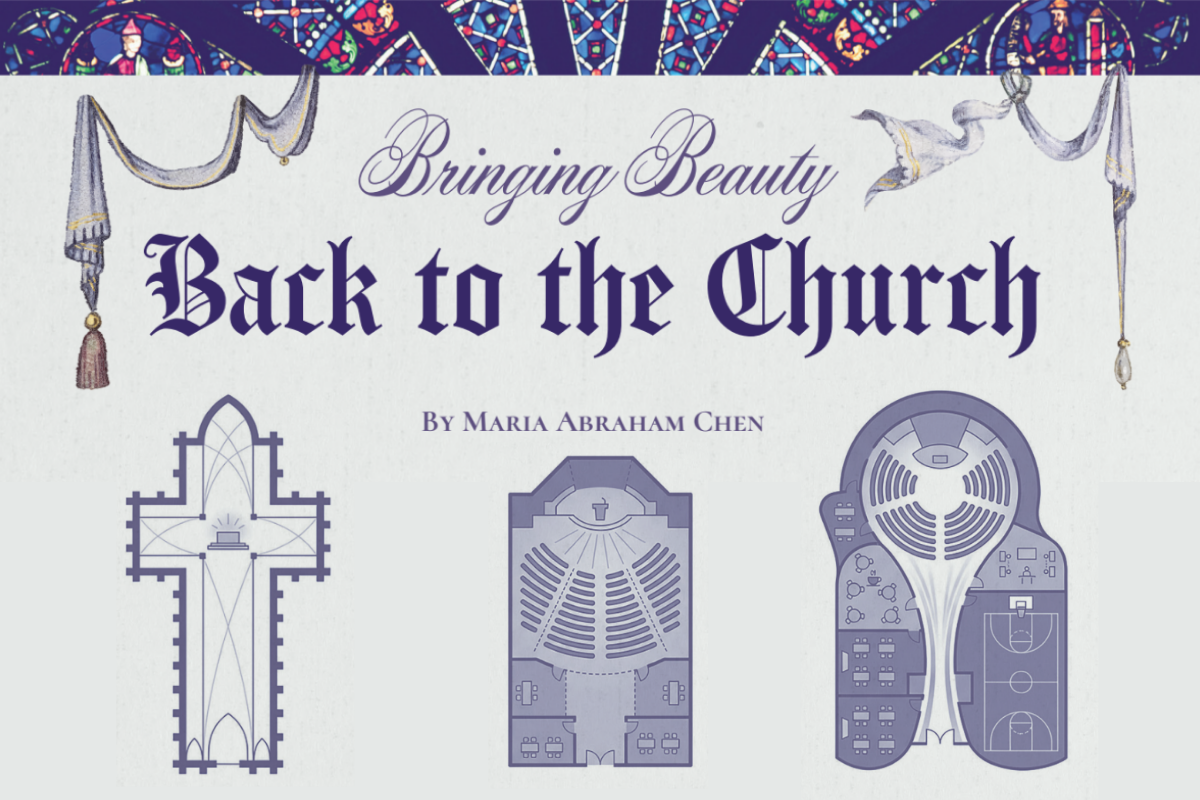
Sleek, minimalist sanctuaries are on the rise. Does stripping architectural beauty from church design also wears away our immersion in sacred spaces? How much does the space shape the our spiritual experiences?
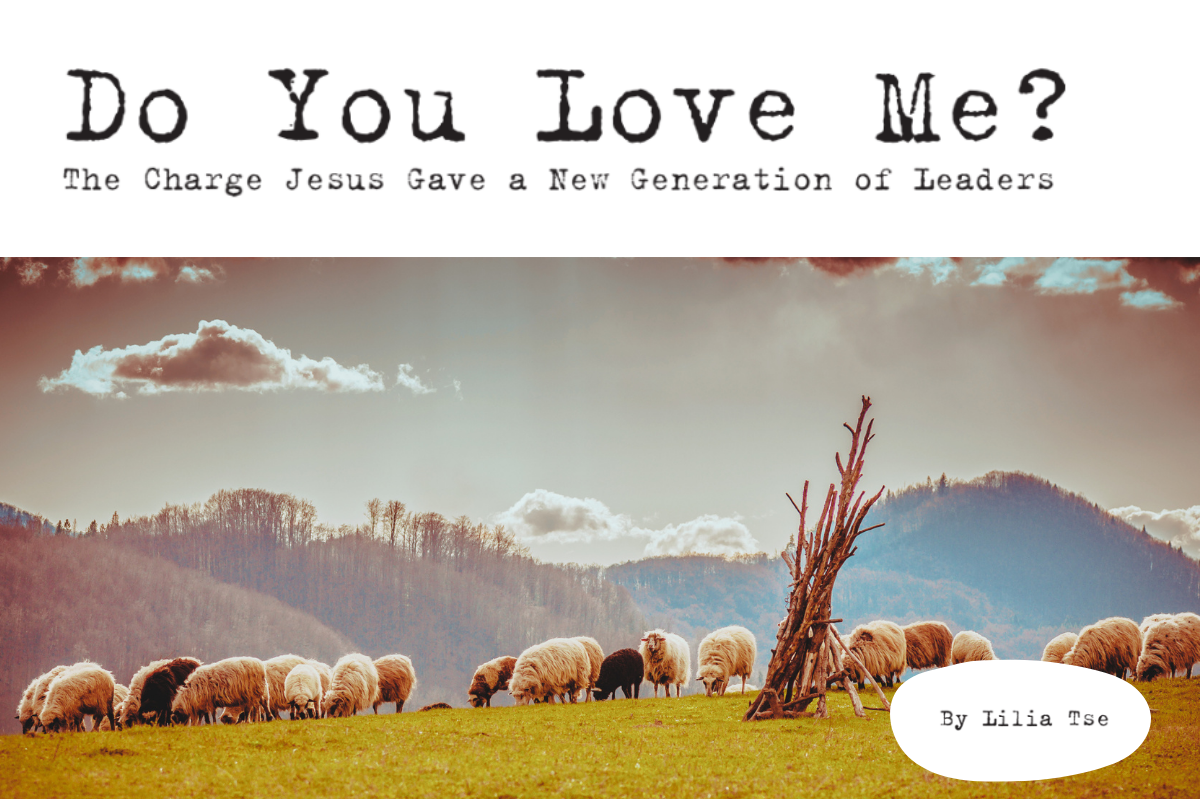
On a Galilean shore, over a fish breakfast, Jesus asks Peter a question three times — then hands him a charge for the Church that still echoes to Christians everywhere today.
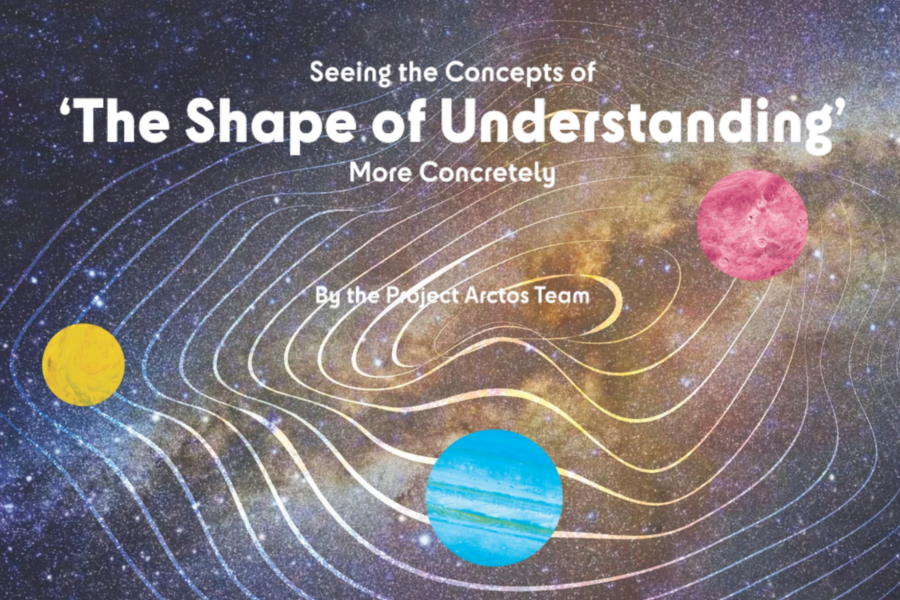
Is a sheep good because it’s a sheep? Or a wolf bad for being a wolf?
Can Christians have completely opposing ideas of what is good? If so, can we see the form of Christ behind those ideas?
How do we lift up Christ and “let Him do the drawing” in these contexts and situations?
Explore a deeper vision of work that transcends income, status, and career advancement. Discover how faith redefines purpose, vocation, and daily labor—inviting Christians to see their professional lives as sacred participation in God’s redemptive mission, where calling, identity, and Kingdom impact matter far more than a paycheck.

Explore a hopeful, faith-anchored vision for the year ahead amid global uncertainty and cultural turbulence. Reflect on how faith, hope, and love form an unshakable foundation for Christian life—equipping believers to face trials with courage, live with eternal perspective, and embody Christ’s light in a world longing for renewal.

Community feels elusive in an age of constant movement and digital connection. Younger generations move more frequently, work remotely, and often rely on screens—yet meaningful friendship still demands time and presence. Recognizing these patterns is the first step; choosing to stay, engage, and invest relationally is the next…

Unsurprisingly, church hurt/religious trauma was at the heart of my emotional distance, and upon further examination, I can clearly pick out the “hard lessons” I learned from my interactions with fellow Christians. Most experiences have left me jaded, bitter, and doubtful that I belong in a fixed Christian community like church. But some have revealed God’s love, faithfulness, and grace…

The enduring message believers have heard “from the beginning”—the call to love one another. This foundational truth remains essential for living faithfully in a world full of distractions and shifting values. Let us return to the simplicity and power of abiding in Christ's love…

We often take Scripture and abstract it into ideas we speak about but rarely live. We like to talk about things we’ll do in the future, from New Year’s resolutions to various hopes and dreams.
But what does it actually mean to un-abstract our Christian lives?

One of the sad ironies about the way that church is done today: we are a relationship-based organization that is really bad at relationships… It’s a miserable revelation that many committed Christians have had to endure in these recent years of scandals and schisms–that a lot of our church friends are fair-weather friends, whose love and support depends on if you’re still in good standing…

Jesus placed a high value on friendship, demonstrated through his words and modeled in how he related to others. This holds true for us in our current world… close friendships provide protection against mental health issues such as depression and anxiety, response to stress, and heart health in difficult times, while loneliness increases the risk of heart attack, stroke, and premature death…

When my wife, Linda, passed away in April 2023, I wasn’t prepared to go through the pain that comes with such a grief journey. The first three months were the hardest for me.
I must thank at least six different kinds of friends who brought their caring gifts to minister to me during my time of suffering. Each friend came at just the right time using their different gifts which contributed to my timely and proper healing. I hope you can learn and follow the examples of my friends so you can also care for your friends well as they are going through their suffering.

Forming deep friendships is challenging, so we’ve compiled some time-tested tools and tips for making the most of the close relationships in your life. Whether you have a core group of friends or still working to form new ones, this free resource may include the key to unlocking your next deep friendship.

A look at how the paradigm shift shared in 1st Timothy is needed to build better relationships with the opposite sex, a further step towards healthier Christian relationships.

One of the key elements to forming good friendships is simply to be willing to be open to new experiences, to cater to each others’ needs.
The loneliest people I know tend to have a narrow idea about what they are willing to or be interested in doing.
I’m more and more convinced that the best way you can foster a good friendship is to go and do something they want to do (even if you really don’t want to).

I felt as though God was telling me, “Just as though there is more to this church than meets the eye, there is more to My Church than meets the eye.” I had judgments upon people I had never met, and they had larger hearts than my misguided perceptions could have comprehended.

From the experience of training institutions and business leaders, I found that "asking questions" can be a path to kindness. In the four Gospels, Jesus asked more than 300 questions. But wait a minute, Jesus declared himself to be “the way” and “the truth” and he knew what was in people’s hearts, so why did he ask so many questions?

Recently, I found out a friend of mine who I admired very much had been abusing a secret lover of theirs. This was a shock to me, naturally. It was also shocking to me how hard it was to decide to “do the right thing,” whatever that means.

Death’s properties are viral. It has the power to break the invulnerable. One who is alive can never relate to one dead regardless of how hard they try. How long would I stay in the grave?
How will advances in technology, like chatgpt3, the continuing after-effects of the COVID-19 pandemic, and the pervasiveness of divisive American politics impact the Church and your Christian witness in 2023..?
What can local church ministry look like when we take the time to partner with our local communities and include them in our vision and planning?

We often stray from the basics. Sometimes we think we have advanced beyond the basics and fundamentals but everything we do is based on their foundation.
The skill tree is a practice-based initiative based on the beatitudes in the Sermon on the Mount found in Matthew 5. Using these beatitudes, we’ve developed a skill tree for each beatitude that contains tasks and achievements for walking through the spirit of the beatitude with the grace of God.

In July of 2019, my family left our local church in pursuit of an alternative model to organizing a church community. Not being in a formal church forced my family and me to develop our own spiritual practices as a unit. I had to keep reminding myself that I left western conceptions of church, but that I did not leave God.

We asked friends and family about how this past year has been for them and if there’s anything they wanted to share related to the past year. Here are some perspectives from Pennsylvania, Massachusetts, and Rhode Island.
HOW DO WE DO THINGS? WHAT’S OUR ETHOS?
Tradition vs. Innovation: If you’ve been part of religious groups, you’ll often find a pattern of tradition. Tradition is not bad, but we believe tradition combined with human nature can often form an us vs. them mentality of old vs. new, in vs. out. We believe the problem is not that old ways are bad in themselves, but when the old inhibits rather than guides the new. Unfortunately, these differences often form splits and battles rather than constructive conversations and mutual encouragement.
This means:
Listening first: We invite the traditional to join and listen first.
Try the new: We invite the new to try, reflect, and try again. We welcome the unexpected.
Institutional vs. Relational: Project Arctos exists to find people, build relationships, and empower others. We believe in structure grown from relationships, not institutional roles. Project Arctos does not exist to build institutions but to build relationships. We know relationships are messy as we all have weaknesses, but we believe relationships are worth struggling to build, so that we may all grow to be more vibrant Kingdom citizens.
This means:
Our agenda is your growth: We structure our activities and content on the hearts of members and not our own preset plans.
Listening over telling: we expect listening to dominate our end of conversations - listening to God and listening to others. We expect God to lead in all we do.
Comfort vs. Discomfort: We all enjoy being comfortable, but seeking comfort can often lead to indifference, indecisiveness, and an general spiritual slumber we liken to torpor (a type of hibernation). We need others in our lives who will hold us to a higher call, who will remind us who we are, and who will challenge us to be our fullest spiritual selves. Studies show that people do poorly at sacrificing the short term for the long term. Studies also show we don’t like feeling inadequate or being wrong.
As such:
Invited Accountability: We help facilitate small groups to explore and challenge each others ideas and passions, and to provide regular reminders to dig deeper and keep moving when passions go from blazing fires to glowing embers (or slumbering bears).
Action & Reflection: We seek to live out what Jesus calls us to and to reflect and ask for feedback. Taking action on the words of Jesus and reflecting in community helps us to push beyond feeling good to living what is good.
Why do so many hesitate to lead? Tiffany Tang shares 4 steps to build the self-awareness and empathy that turn hesitant hearts into faithful leaders.